
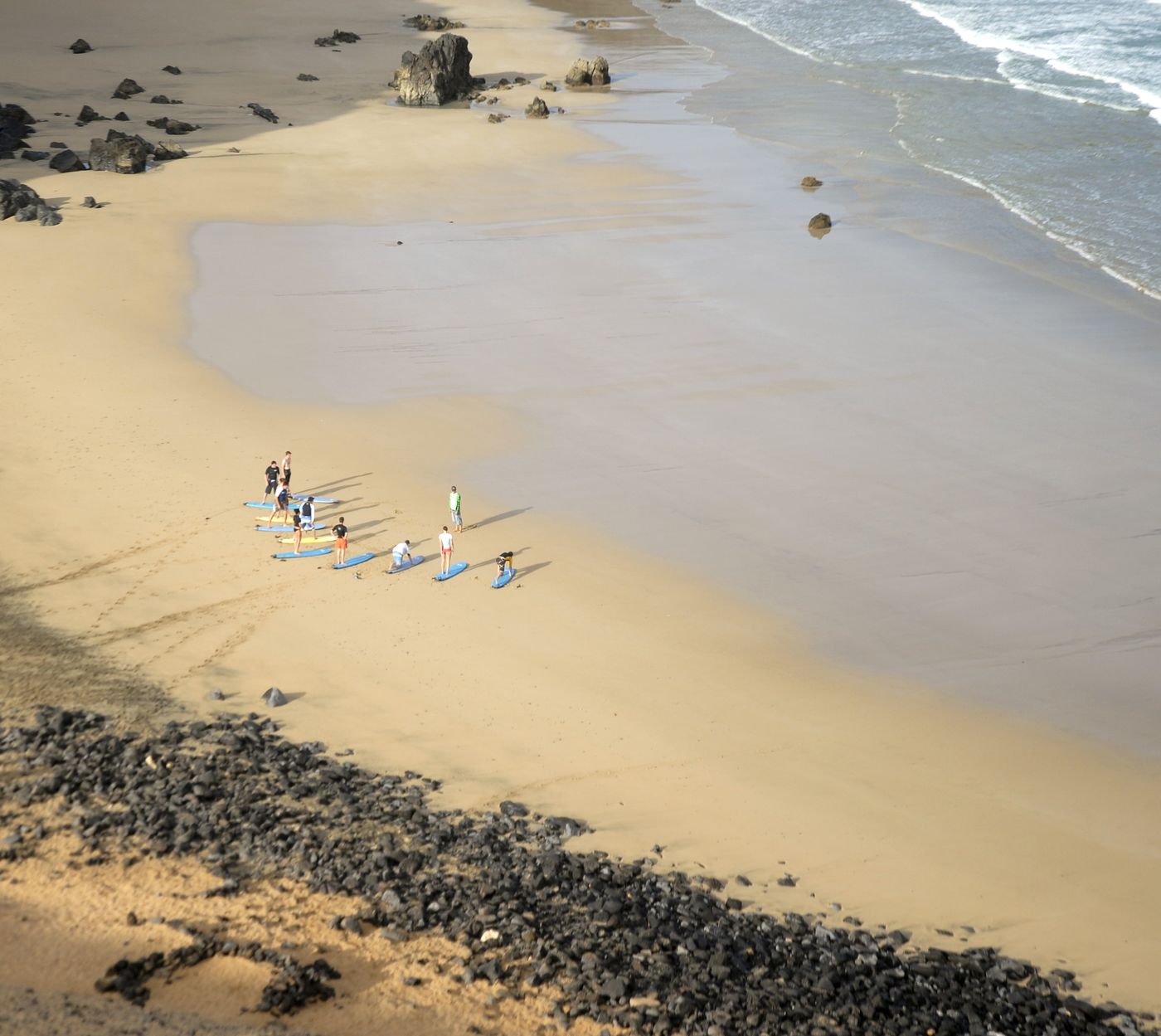
Corralejo has two kinds of beach. South of the town, the Grandes Playas run for several kilometres along the dunes of the Corralejo Natural Park: wide, open and often windy. In the town itself, small beaches by the harbour are calmer and good for a swim. Flag Beach has taught watersports on the Corralejo beaches since 1987. Our centre is on Playa de Corralejo, where the dunes begin.
Corralejo beaches at a glance
The table gives the short answer. Conditions change with the wind and the tide, so always check the flag and ask at the beach.
| Beach | Where | Best for | Conditions |
|---|---|---|---|
| Grandes Playas | South of town, along the FV-1 through the dunes | Long walks, sunbathing, kitesurf, windsurf | Open Atlantic, often windy, waves on some days |
| Playa de Corralejo | Where the dunes start, south end of town | Lessons, kite and wing foil, beach walks | Wide sand, side-onshore trade wind |
| Playa de la Galera | Town centre | A quick swim close to cafés | Small and sheltered, some rocks |
| Playa del Muelle Chico | Next to the harbour | Families with young children | Calm, shallow water |
| North shore reefs | Track from Corralejo west to Majanicho | Experienced surfers | Reef breaks, best October to April |
| Isla de Lobos | Short ferry ride from the harbour | Snorkelling, walking, stand up paddle | Protected islet, visitor permit needed |
Grandes Playas and the Corralejo dunes
The Parque Natural de las Dunas de Corralejo protects the white dunes south of the town. The sand is made of crushed shell, and the trade wind keeps moving it inland. The FV-1 road crosses the park towards Puerto del Rosario, with lay-bys where you can park and walk to the sea.
Along the beach you will see low half-circles of stacked stones. These are old windbreaks. Please don’t move the stones or build new ones: the dunes are protected.
The park has a few simple rules. Stay off the plants on the dunes, don’t take sand or stones, and don’t drive off the road. Camping is not allowed.
The wind comes from the north-east on most days, strongest from March to September and usually stronger in the afternoon. That is why the Grandes Playas are the island’s kite and windsurf beaches. For swimming it means waves and currents on many days, and most of this coast has no lifeguard.
Town beaches for swimming and families
If you want calm water, stay in town. Playa del Muelle Chico sits next to the harbour wall, which keeps the water flat and shallow. It is the easiest beach for small children. Playa de la Galera, in the centre, is a small sandy bay between rocks with bars and cafés behind it.
Both beaches are a short walk from most hotels and holiday homes. They get busy around midday in high season, so come early if you want space.
Which beach for which sport
No single beach works every day. That is why we run a mobile school: each morning our instructors look at wind, swell and tide, then choose from 10+ beaches in the north of Fuerteventura.
- Kitesurf, wing foil and windsurf: Playa de Corralejo and the Grandes Playas when the trade wind blows side-onshore. On other days we move to flatter water. Read more on our kitesurfing in Corralejo page.
- Surf: beginners learn on sandy beaches with small, even waves, which are often on the west coast. The north shore reefs are for experienced surfers. Our surf lessons in Fuerteventura include the drive to the right beach.
- Stand up paddle: calm mornings in town, or a crossing to Lobos with our SUP team.
As a rule of thumb, surf is most consistent from October to April. June to August brings smaller, warmer waves for first-timers. The wind sports peak from March to September.
Beyond Corralejo: Lobos and El Cotillo
Isla de Lobos lies just off Corralejo. Ferries leave from the harbour and take about 15 minutes. The islet is a protected area with no cars, a walking trail round the island and clear water for snorkelling. You need a free visitor permit from the Canary Islands government, so book it online before you buy a ferry ticket.
El Cotillo is on the west coast, about 20 minutes by car. North of the village are shallow lagoons sheltered by reef, south of the harbour is an open Atlantic beach with bigger waves. Our kite and surf shop in El Cotillo rents boards and knows the day’s conditions.
Practical: getting there, parking and beach flags
The town beaches are on foot from anywhere in Corralejo. For the Grandes Playas, the bus between Corralejo and Puerto del Rosario runs along the dunes, or you can drive and park in the lay-bys on the FV-1. Don’t leave valuables in the car.
Where there is a lifeguard, a flag shows the conditions. Green means swimming is fine, yellow means take care, and red means no swimming. On the dunes there is no shade, and the wind hides how strong the sun is. Bring water, a hat and sun cream.
Looking for somewhere to stay close to the beaches? See our accommodation in Corralejo.
Corralejo beaches: common questions
Which is the best beach in Corralejo?
It depends on what you want. For a calm swim, choose Playa del Muelle Chico or Playa de la Galera in town. For space, dunes and long walks, go to the Grandes Playas.
Can you swim at the Corralejo dunes?
Yes, on calm days. The Grandes Playas face the open Atlantic, with waves and currents on many days and few lifeguards. Swim near a lifeguard and follow the flag.
Is Corralejo windy?
Often, especially from March to September and in the afternoon. The town beaches are more sheltered than the dunes, and mornings are usually calmer.
Which beach is best for children?
Playa del Muelle Chico, next to the harbour. The water is shallow and protected by the harbour wall.
Questions about a beach, a lesson or the conditions this week? Get in touch with our team. We are on the beach every day.